
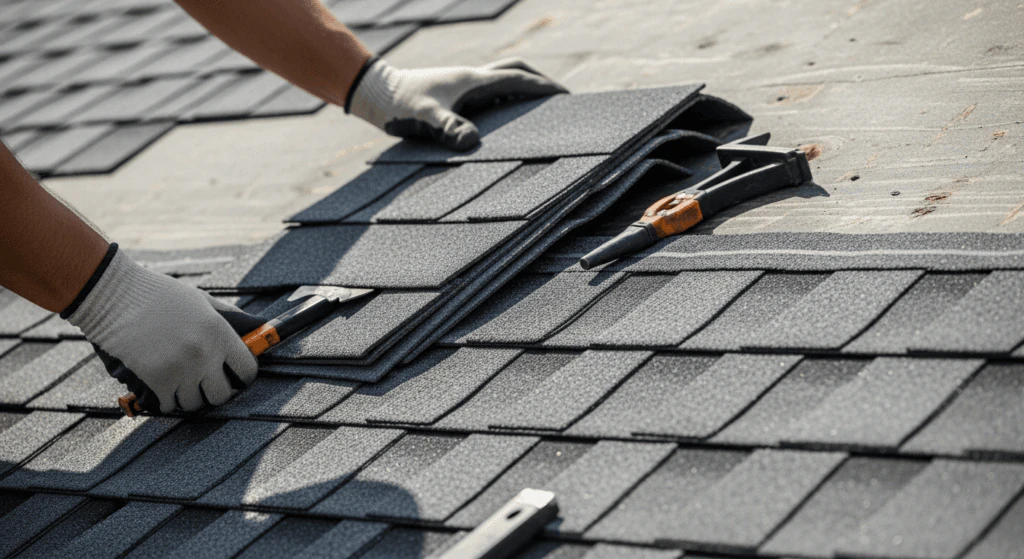
For a planned replacement, we'd say the best time to replace a roof in DFW is usually fall. The spring storm peak has passed, the summer heat has eased, and there's still enough warmth and sun for new shingles to seal. Summer and winter work too if the crew follows the shingle maker's hot or cold weather steps. If your roof is leaking or storm-damaged, don't wait for a better season.
The season matters. So does the weather on the days the crew is on your roof, and how busy roofers are when you call.
This post goes through each season, how far ahead to plan, and when waiting is the wrong call. It's about replacing a roof. For yearly upkeep, see our season-by-season guide to Texas weather and your roof.
Why is fall usually the best time to replace a roof in DFW?
In our view, it has the fewest trade-offs. Part of the reason is how new shingles seal.
Most asphalt shingles carry a strip of sealant that bonds each one to the shingle below once the sun heats it. Owens Corning's cold-weather installation bulletin says direct sun is what activates the sealant on its shingles. Until that bond forms, wind can lift shingles more easily. That's why the same bulletin calls for hand-sealing in cold weather.
Fall still has plenty of warm days for the sealant to do its work. It also misses the worst of the other seasons. The National Weather Service office in Fort Worth says severe weather in the Dallas-Fort Worth area peaks in spring (NWS climate summary). By fall, the summer heat that softens shingles has usually passed.
It isn't dry, though. The same summary says spring and fall are typically the wettest times of year, mostly from thunderstorms, with pleasant spells between them. Plan for the occasional rain delay. A good crew checks the forecast before it strips any part of your roof.
For a planned replacement, the seasons compare like this:
| Season | For the install | Storms and scheduling | Our verdict |
|---|---|---|---|
| Fall | Warm days for sealing, without summer's heat | Past the spring storm peak, but fall storms still bring rain | Best fit for most planned jobs |
| Winter | Mostly mild, but the cloudiest season, with brief cold snaps | Less rain than spring or fall, and some wintry weather every year | Fine on mild days, with cold-weather steps |
| Spring | Comfortable temperatures | Peak season for severe storms and hail; roofers can get busy after hail | Workable if you book early and allow for delays |
| Summer | Hottest, sunniest stretch; shingles soften in the heat | Brief afternoon and evening storms | Fine with early starts and a careful crew |
Can you replace a roof in summer in Texas?
Yes. Shingles are made to take the summer sun once they're on the roof. The care is needed while they're going on.
Heat softens asphalt shingles, so they scuff more easily underfoot and nails can drive too deep. Shingles also bond fast in the heat, and one laid out of flat can stay distorted. Malarkey Roofing Products' hot-weather installation bulletin covers all of that. It tells installers to plan the day around the sun, wear soft-soled shoes, set nail guns for flush nailing and limit foot traffic on the finished roof.
For you, that usually means an early start, with the south-facing slopes done before they bake in the afternoon sun. On the plus side, summer sun seals new shingles quickly. What usually stops work is a pop-up storm, since brief afternoon and evening thunderstorms bring most of DFW's summer rain.
Can you replace a roof in winter in Dallas?
On most winter days, yes. The NWS describes Dallas-Fort Worth winters as generally mild, with cold fronts that usually bring only brief cold spells.
Cold makes shingles stiff, so they can crack if they're bent or dropped. Their sealant may not bond until warmer weather comes back. Owens Corning's bulletin sets out extra steps for when the air and roof surface are at or below 40°F. Shingles get handled with more care and hand-sealed around the roof's edges with dabs of roof cement. They're also laid with a slight gap, so they don't buckle when warmer weather expands them.
Sun matters as well as warmth, and winter is the cloudiest season in Dallas-Fort Worth. A roof finished in a gray week can wait a while to seal, and the hand-sealing protects against wind in the meantime. So ask how a crew handles a cold week before you sign. Malarkey, for one, says its wind warranties apply only once shingles are sealed, by hand or by their own sealant strip.
Nobody should work on frost or ice. If freezing rain is forecast, expect your start date to move.
Why is spring the hardest time to book a roof replacement?
Because spring is storm season, and after a big storm, expect roofers to be busy. The NWS says large hail, damaging winds and tornadoes hit somewhere in the Metroplex nearly every year.
One bad hail storm can leave whole streets needing roofs at once. Homes with holes and leaks should come first, so a planned job on a tired but watertight roof may wait behind them.
Storms also bring crews from out of town. The Texas Department of Insurance advises against hiring contractors who go door-to-door after a storm. It also warns about ones who only take cash, want money before the materials arrive, offer cut-price specials, have only out-of-state references, or have no local address.
A planned spring job can still work. Get on the schedule in winter and allow for delays. If hail has already hit, start with the first steps after a hail storm and get the roof inspected for hail and storm damage before you plan anything else.
How far ahead should you plan a roof replacement?
Start the season before. If you want a new roof in fall, begin in late summer.
A replacement takes more than one visit. Before the old roof comes off, there's usually:
- an inspection and a proposal
- choosing the material and color
- HOA sign-off, if your neighborhood requires it
- a building permit, where your city requires one
- ordering materials
- a start date the weather can still move
Storm season can stretch all of it.
Suppose your house in Plano still has its original roof, and granules are collecting in the gutters. If you want the new roof on before the holidays, all of that has to fit in first, so make the first call early, not the week the first cold front blows through. Check whether you need a permit to replace a roof in Plano as well. If the gutters are tired too, decide whether to replace your gutters with the new roof before the crew is booked.
When should you replace your roof now instead of waiting for fall?
When water is getting in or a storm has done real damage. Waiting for good weather suits a tired roof that still keeps the rain out, not one that doesn't.
Don't wait if:
- water comes through a ceiling when it rains (see what to do while your roof is leaking)
- a ceiling stain keeps spreading after each rain (see whether a water stain on the ceiling is a roof leak)
- hail or wind has torn off shingles or opened holes
- the roof deck feels soft or sags
- the roof needs patching after nearly every storm
After storm damage, protect the house first. The Texas Department of Insurance's advice after a storm includes temporary repairs to prevent more damage, such as covering holes to keep rain out. If you have homeowners insurance, check your policy and talk to your insurance company. So now might mean a tarp this week and a new roof later.
An old roof with no leaks is different. Nothing is getting in yet, so it's a job you can plan, and you get to choose the season. If you're not sure it's past fixing, read roof repair vs roof replacement.
How does Fit Roofing & Construction plan a roof replacement?
A roof replacement in Dallas-Fort Worth with us starts with an assessment of your roof. We identify the issues and give you our recommendations. Next comes a proposal covering material options, timeline and pricing, and we answer your questions before work begins. That's the moment to ask what the start date depends on.
We install asphalt shingle, metal and tile roofs. We can also add new gutters or attic ventilation and insulation upgrades alongside a replacement. If a storm has left your roof leaking, tarping and leak prevention are part of our storm repair services.
We serve homes and businesses in Dallas, Fort Worth, Arlington, Plano and nearby communities. See where we work in Dallas-Fort Worth.
What should you do first if your roof is due for replacement?
Decide whether it's urgent. If water is getting in, protect the house first and plan the new roof second.
If the roof is just old, pick a season and work back from it. For most homes here, we'd pick fall. If fall doesn't work out, our next choice is the mild days of winter, with the cold-weather steps above. Either way, settle the material, color and any extras early, and leave room for HOA and permit paperwork.
When you compare proposals for replacing your roof, ask each roofer how they'd handle the weather in the month you're booked, and what happens if rain turns up mid-job. A roofer who answers both plainly has thought about your season.