
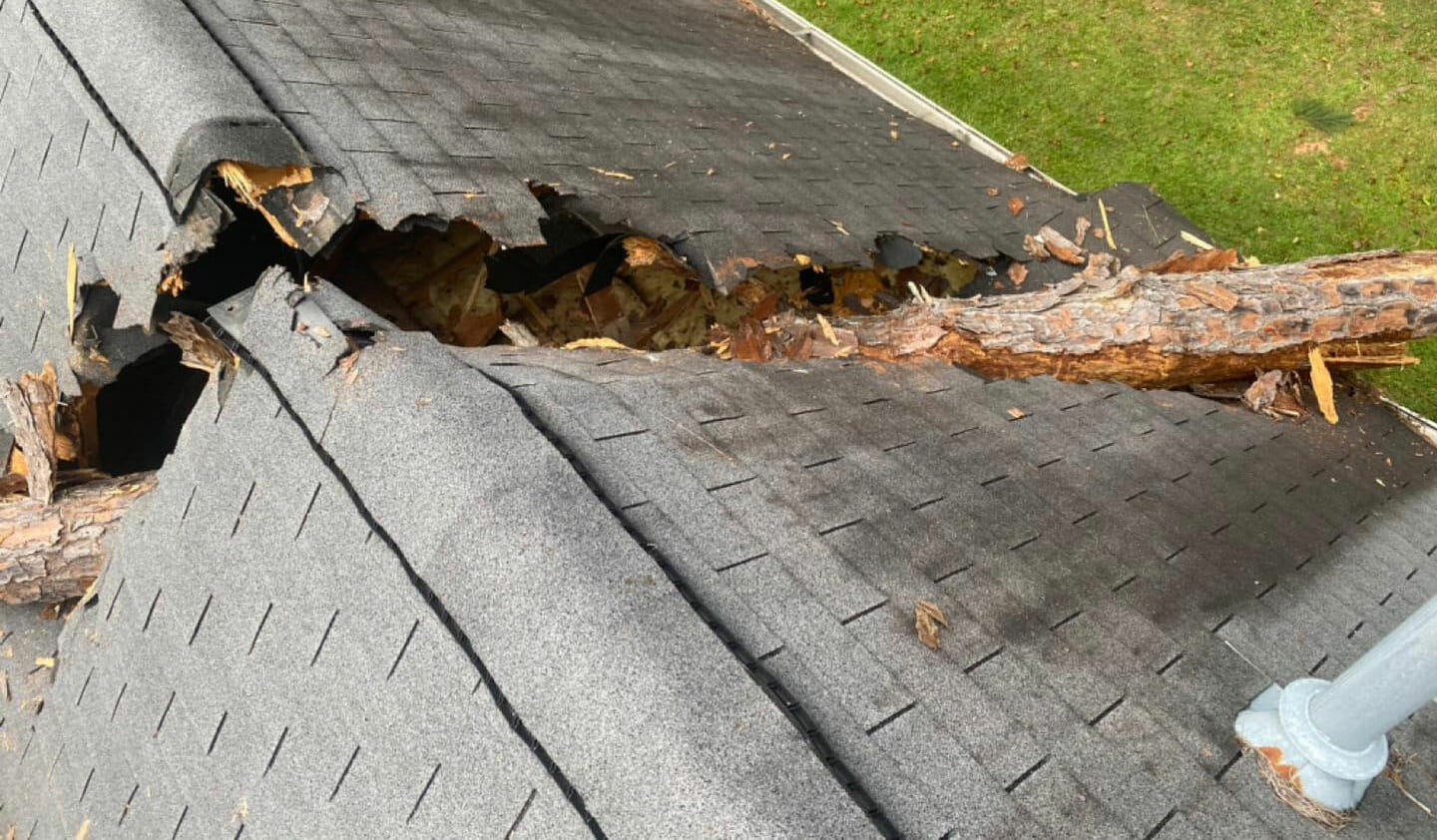
If your roof is leaking during a storm, the first thing to do is deal with the dangers: keep away from water near outlets, light fixtures and anything plugged in, and keep everyone out from under a sagging ceiling. Cut the power to the wet area at the breaker only if you can reach the panel standing on a dry floor. Then catch the water, move your things and take photos. Stay off the roof and off outdoor ladders until the storm has passed, because the roof and any tarp can wait.
This guide runs in the order that matters tonight: the power, the ceiling, the water, your records and then the call to a roofer. Whether a slow drip can wait is a separate question, covered in our post on the cost of leaving a small leak.
Should you turn off the power when water comes through the ceiling?
Yes, if water is reaching anything electrical and you can do it safely. Water near wiring is what makes a roof leak an emergency. Ready.gov's flood advice puts it plainly: "Do not touch electrical equipment if it is wet or if you are standing in water." It also says to turn the electricity off if it is safe to do so.
In practice, that means switching off the breaker for the wet room, or the main, while you stand on a dry floor with dry hands. If the panel is in a wet garage, or you would have to walk through water to reach it, leave it alone. Call your electric utility or an electrician, and keep everyone out of that part of the house. If you see sparks or smell burning, get everyone outside and call 911.
Water dripping from a light fixture or a ceiling fan is the clearest case for cutting the power. So is water running down a wall that has outlets in it.
Thunder adds one more rule. The National Weather Service says that indoors during a thunderstorm you should not touch anything plugged into an electrical outlet. If something plugged in is getting wet, switch off its circuit at the panel rather than pulling the plug. The wet-vac and the fans can wait until the thunder has moved off.
What do you do when the ceiling is bulging with water?
Get everyone out from under it, pets included. FEMA's guide to repairing a flooded home warns that a lot of wind and rain can leave a ceiling holding water, and that wet plaster or wallboard is very heavy and dangerous if it falls.
Treat any room where a tree or a big limb has come through the roof the same way, and keep that door shut.
Do not try to drain the ceiling or pull it down yourself, and do not step under it to set out a bucket. Keep the room empty and lay towels along the threshold to hold back the water.
FEMA's guide notes that a sagging ceiling has to be replaced anyway, so there is nothing to save by getting close to it. Leave it to a professional once the storm has passed.
Can you stop a roof leak from inside the house?
Not really. The opening is on the roof, and only a roof repair from outside closes it. From inside, you can control where the water goes and how far it spreads.
Put a bucket or tub under each drip, with an old towel in the bottom to stop the splashing. If a drip is coming from a sagging patch, leave it and keep clear. Move furniture and rugs out of the way. Cover what you cannot move with plastic sheeting or a shower curtain, and lay towels where water is creeping across the floor.
If you have attic access and the ladder or stairs up to it are safe to use, take a flashlight up. Step only on the joists or on boards laid across them, since the drywall between them will not hold you, and keep your hands off wiring and light fixture boxes. Set a bucket on a scrap of plywood across the joists, never straight on the drywall. Pull back insulation that is soaked so it stops holding water against the ceiling. Then photograph the spot where water is coming through the roof deck.
Expect the drip and the hole to be in different places. Water often runs along a rafter or the underside of the deck before it falls. The stain on your ceiling can sit some way from the real opening, which is why those attic photos matter.
Why does a roof leak only in heavy rain or wind?
Because ordinary rain runs down a roof the way it was built to, and storm rain does not. Wind drives water sideways, under shingle edges and around flashing. A heavy downpour can overwhelm a valley where two slopes meet, or the flashing behind a chimney.
That is how a roof stays dry through a whole season and then leaks in one storm. The usual places to look are the flashing around chimneys, vents and skylights, lifted or missing shingles, and valleys.
Is it safe to go on the roof or tarp it during the storm?
No. The National Weather Service is blunt that there is no safe place outside when thunderstorms are in the area. On a wet slope in gusting wind, one slip off a ladder can do more harm than the leak ever will.
A tarp is the right short-term fix. It goes on after the storm has passed, in daylight, by someone with the gear and the footing to work on a roof. Covering a damaged roof this way is a normal part of storm repair.
What should you photograph and keep for your records?
Photograph the damage before you clean anything up. Take wide shots of each wet room and close-ups of the ceiling, the drip, the attic and anything that got soaked. A short video shows water moving in a way a still photo cannot. Write down when the leak started.
The Texas Department of Insurance's tips for storm damage add two things worth doing now. Make a list of the damage inside and outside. Save the receipts for what you spend to stop more damage, such as tarps, buckets and fans.
For anything about coverage, check your policy and talk to your insurer.
What should you tell the roofer when you call?
Tell them where the water shows up inside, when it started and what the storm brought, whether that was wind, hail or a falling limb. Mention whether it leaks in every rain or only in wind, any past repairs in that spot, and anything still open to the weather. If you know the age and material of the roof, say so. Have your photos ready to send.
If a storm line comes through Arlington overnight and water starts dripping from the hallway light, your first move is the breaker, and the roofer comes second. When you do call, "water through the hallway light, a bathroom vent on the roof above it, started around midnight with strong wind from the south" tells a roofer far more than "my roof is leaking."
What does Fit Roofing do about storm leaks?
After a storm, we can tarp an open roof to keep the rain out, and our storm and hail damage repair covers hail damage, wind damage, leaks and missing shingles. When it comes to repairing roof leaks, we trace the leak, repair and reseal flashing, and replace damaged shingles, on shingle, metal and tile roofs alike.
Your photos and attic notes help narrow down where to look.
What comes next once the rain stops?
Start drying. The EPA's guidance on indoor leaks is to act quickly, since wet materials that are dried promptly usually do not grow mold. Once the thunder has gone and the power in that area is safe to use, run fans and a dehumidifier and wet-vac the carpet. Leave any circuit with a wet light fixture or outlet switched off until an electrician has checked it. Keep the attic insulation pulled back until the drywall below has dried.
Then get the roof looked at, even if the dripping has stopped. A leak that stops with the rain has not fixed itself.
If the roofer says the roof needs replacing rather than repairing, ask for the reasons in writing. Compare them with what roof repair versus replacement usually comes down to. If it does come to a new roof, that is also the time to decide whether to replace your gutters at the same time.