
Texas weather is extreme. Between intense heat, hailstorms, strong winds, and sudden temperature changes, your roof is constantly under pressure.
So the key question homeowners ask is:
How long does a roof last in Texas weather?
The answer depends on the roofing material, installation quality, and ongoing maintenance. Below is a clear breakdown to help you understand what to expect and when to take action.
Average Roof Lifespan in Texas
Here’s how long common roofing materials typically last under Texas conditions:
Asphalt Shingle Roofs
- Lifespan: 15–25 years
- Most common in Dallas–Fort Worth
- Affordable but more susceptible to heat and hail damage
Tile Roofs (Clay or Concrete)
- Lifespan: 30–50 years
- Highly resistant to heat
- Heavier and more expensive
Metal Roofs
- Lifespan: 40–70 years
- Reflects heat effectively
- Strong resistance to wind and fire
Flat / Commercial Roofs (TPO, EPDM)
- Lifespan: 15–30 years
- Requires consistent maintenance
Important: Roofs in Texas often wear out faster than the national average due to harsh weather conditions.
Why Texas Weather Reduces Roof Lifespan
Extreme Heat and UV Exposure
Texas summers regularly exceed 100°F. Prolonged exposure to heat can:
- Dry out shingles
- Cause cracking and warping
- Accelerate material breakdown
Heavy Rain and Storms
Frequent storms can lead to:
- Water pooling
- Leaks and moisture damage
- Structural issues if not addressed early
High Winds
Strong winds may:
- Lift or remove shingles
- Damage flashing
- Expose vulnerable areas to water intrusion
Hail Damage
Hail is one of the leading causes of premature roof failure in Texas:
- Cracked or bruised shingles
- Loss of protective granules
- Hidden structural damage
Many homeowners are unaware of the damage until it becomes severe.
Signs Your Roof May Need Replacement
Even if your roof hasn’t reached its expected lifespan, watch for these warning signs:
- Missing, curling, or cracked shingles
- Water stains on ceilings or walls
- Recurring leaks
- Sagging roof sections
- Granules accumulating in gutters
- Increasing energy bills
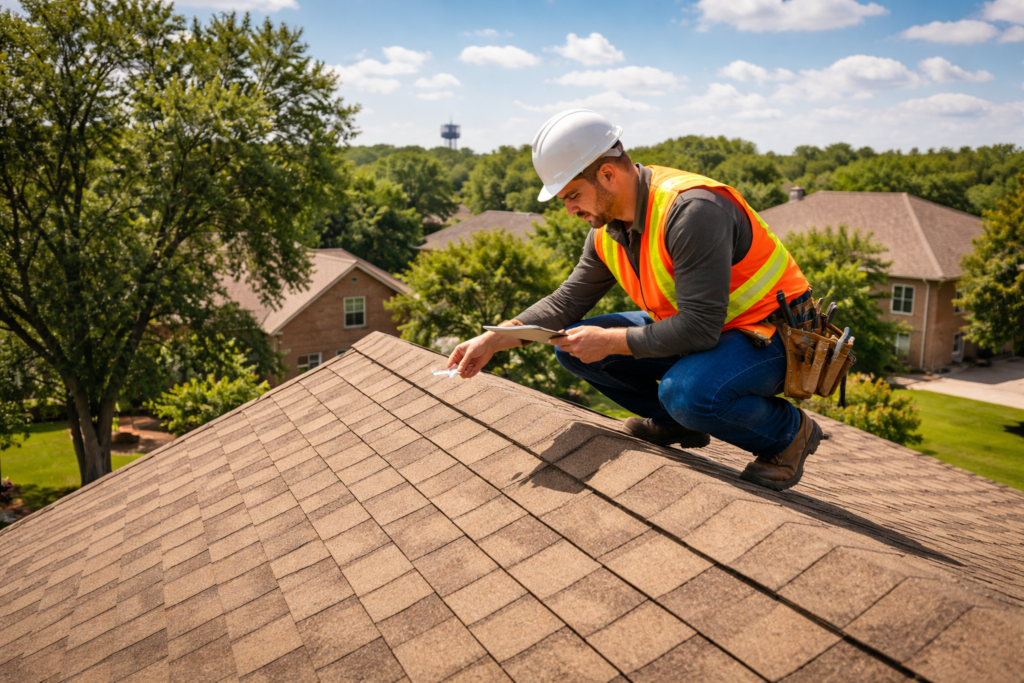
If you notice any of these issues, a professional inspection is recommended.
How to Extend Your Roof’s Lifespan
To maximize the life of your roof, consider the following:
Schedule Regular Inspections
Have your roof inspected at least once a year and after major storms.
Address Repairs Early
Fixing small issues promptly can prevent costly damage later.
Maintain Gutters
Clean and functional gutters help prevent water buildup and damage.
Ensure Proper Attic Ventilation
Good ventilation reduces heat and moisture buildup inside your home.
Use Quality Materials
Higher-quality materials generally perform better and last longer in Texas conditions.
When Should You Replace Your Roof?
Use these general guidelines:
- At 15–20 years (asphalt roofs): Begin planning for replacement
- After major storm damage: Schedule an inspection immediately
- Frequent repairs: Replacement may be more cost-effective
Delaying replacement can lead to interior damage, higher repair costs, and insurance complications.
Why Professional Installation Matters
Proper installation plays a major role in how long your roof will last.
Working with certified professionals ensures:
- Correct installation techniques
- Manufacturer warranty protection
- Compliance with Texas building regulations
Poor workmanship can significantly reduce your roof’s lifespan.
Protect Your Investment
Your roof is one of the most important components of your home. In Texas, it must withstand some of the toughest environmental conditions.
If you are unsure about your roof’s condition, the best step is to have it evaluated by professionals.
Get a Free Roof Inspection
If you suspect damage or your roof is aging, schedule a professional inspection.
A proper assessment will help you understand your roof’s condition, remaining lifespan, and whether repairs or replacement are needed.
Frequently Asked Questions
How long does a roof last in Dallas, TX?
Most asphalt roofs last between 15 and 25 years, though severe weather can shorten that lifespan.
Can a roof last 30 years in Texas?
Yes, but typically only with high-quality materials such as metal or tile and proper maintenance.
How do I know if my roof has storm damage?
Common signs include missing shingles, dents, leaks, or visible wear. A professional inspection is the most reliable way to confirm damage.
Final Thoughts
How long a roof lasts in Texas weather depends on several factors, but with proper care and the right materials, you can significantly extend its lifespan.
Regular inspections and timely maintenance are key to avoiding major repairs and protecting your investment.